
A judicial review of the Norwegian Saleform clause 9 Indemnity clause: Aquilo Shipping Inc v SRTT Marine Trading & Services Pte Ltd [2026] SGHC 79
- 17 August 2026
Introduction
The recent decision of the Singapore High Court in Aquilo Shipping Inc v SRTT Marine Trading & Services Pte Ltd [2026] SGHC 79 draws a clear line between the liabilities a seller must reimburse under clause 9 of the Norwegian Saleform 2012 (“Saleform 2012”), and the steps it is not required to take to prevent those liabilities from materialising in the first place.
This distinction is significant for buyers and sellers of vessels relying on Saleform 2012, the dominant standard form contract for the sale and purchase of ships globally.
Clause 9 of the Saleform serves to allocate the risk of claims that surface after delivery but originate from events before it.
It reads:
The Sellers warrant that the Vessel, at the time of delivery, is free from all charters, encumbrances, mortgages and maritime liens or any other debts whatsoever, and is not subject to Port State or other administrative detentions. The Sellers hereby undertake to indemnify the Buyers against all consequences of claims made against the Vessel which have been incurred prior to the time of delivery.
The clause is short, standard, and rarely negotiated. This case is a useful reminder that this brevity comes at a cost: clause 9 protects a buyer’s pocket, not its cash flow, and it will not force a seller to act before the buyer has already paid.
The dispute
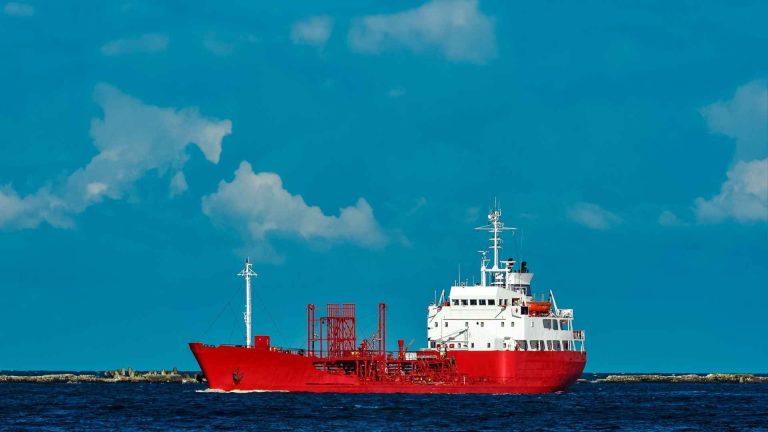
The dispute arose from the sale of a chemical tanker MT “VAYU” (the “Vessel“) under a Memorandum of Agreement (“MOA”) based on the Saleform 2012, clause 9 of which was in the standard form.
Aquilo Shipping Inc (“Aquilo”) took delivery of the Vessel in January 2025 from the seller, SRTT Marine Trading & Services Pte Ltd (“SRTT“). Subsequently, in November 2025, the Vessel was arrested in Singapore pursuant to an admiralty action commenced by cargo interests for misdelivery which occurred prior to the Vessel’s delivery to Aquilo. The arresting party demanded Aquilo put up security of approximately US$3,672,687.10 plus a further S$300,000 in costs to secure the Vessel’s release.
Aquilo’s own P&I Club declined to help, on the basis that a liability attributable to the former ownership fell outside the scope of the coverage provided under its insurance policy.
Aquilo then turned to SRTT, issuing a letter of demand invoking the indemnity clause found in the second sentence of clause 9 of the MOA, demanding that SRTT take over the arrest proceedings and procure the Vessel’s release. When SRTT did not respond to the letter of demand nor its follow-up letter, Aquilo applied to the High Court for an interim mandatory injunction compelling SRTT to furnish the security itself.
That application was brought under section 12A of Singapore’s International Arbitration Act (“IAA”), which lets the Court grant urgent interim relief in aid of an arbitration not yet commenced, provided, under sections 12A(4) and 12A(6) of the IAA, (i) the case was one of urgency; and (ii) the order was necessary for the purpose of preserving evidence and assets; and (iii) the tribunal or institution had no power or was unable, for the time being, to act effectively
The Court dismissed Aquilo’s application on the basis that Aquilo had failed to demonstrate that the case was one of urgency. This was because despite the arrest, Aquilo had still not commenced arbitration by the January 2026 hearing, offered no evidence of intending to, and had not even entered an appearance to contest the arrest itself.
Clause 9 as a compensatory indemnity, not a preventive one
While this finding was sufficient to dispose of the application, the Court nevertheless went on to explain why the substantive requirements for an interim injunction were not satisfied. Central to this analysis was whether clause 9 of the MOA obliged SRTT to furnish security for the release of the Vessel, since the existence of such a contractual obligation was the foundation of the applicant’s claim for injunctive relief.
Exercising its power of summary determination under O 9 r 19(1) of the Rules of Court 2021(“ROC”), the Court determined the issue so as to narrow the matters in dispute and save the parties the time and expense of litigating that question further.
The Court found no serious question to be tried on the merits of Aquilo’s claim that clause 9 of the MOA imposed an obligation on SRTT to furnish security to procure the release of the Vessel. This was on the basis that, properly construed, clause 9 was a compensatory indemnity, obliging SRTT only to reimburse Aquilo for losses it had already incurred, and not a preventive indemnity requiring SRTT to intervene and furnish security before any such loss was sustained.
Textual interpretation of standard form contracts
The Court’s starting point was the text of clause 9 itself, read in the manner a reasonable business person in the shipping industry would understand it. As clause 9 of the MOA was taken from the Saleform 2012, a form used industry-wide rather than negotiated bilaterally, the Court held that its construction was to proceed principally on a textual basis. Where a contract is designed for standard use throughout a market, the relevant background is that which is generally known to industry participants, rather than the particular context of the individual transaction, which correspondingly has a limited role to play. On this approach, the Court was not prepared to read into clause 9 any obligation which the words used, understood in light of market practice, did not already bear.
The distinction between compensatory and preventive indemnities
Against this textual backdrop, the Court applied a well-established distinction between two categories of indemnity. A preventive indemnity requires the indemnifier to intervene and act before the indemnified party suffers loss, such that the indemnified party is never called upon to pay in the first place. A compensatory indemnity, by contrast, merely reimburses the indemnified party after it has incurred loss from its own resources. The paradigm illustration is a debtor whose debt is the subject of a third-party indemnity: under a compensatory indemnity the debtor must first pay his creditor and then seek reimbursement, whereas under a preventive indemnity the indemnifier must pay the creditor directly, such that the debtor is never called upon to pay at all. Whether a given indemnity falls into one category or the other is not a discrete legal test to be separately satisfied. It is simply a question of construction, and the label reflects the outcome of that exercise rather than driving it.
Why the Court read clause 9 as compensatory
i) Practical considerations
The arrest of a vessel, frequently obtained on an ex parte basis and without advance notice to either buyer or seller, gives rise to losses, including port and berthing charges, crew wages, loss of earnings, and the depreciation of a wasting asset, from the moment the vessel is detained. A construction requiring the seller to intervene so as to prevent the buyer from suffering all losses flowing from the arrest of the Vessel would accordingly impose an obligation the seller could not, in practice, discharge.
ii) Commercial purpose
The object of clause 9, namely to protect the buyer against the risk of pre-delivery events materialising as claims after delivery, materialising as claims after delivery, was equally well served by permitting the buyer to meet such claims as and when they arose and to seek reimbursement from the seller thereafter.
iii) Preservation of the buyer’s freedom to respond
A compensatory construction also had the benefit of preserving the buyer’s own freedom to determine how best to respond to a claim, whether by settlement, by contesting it, or by furnishing security, having regard to its own commercial considerations, such as obligations owed under a prospective charterparty. The phrase “claims made against the Vessel” was held to extend beyond an actual arrest to any demand carrying with it a real and present threat of seizure, such that a mere threat by a third party to arrest the Vessel unless security was furnished would suffice to engage the clause. Faced with such a threat, or an actual arrest, a buyer may come under significant commercial pressure, for instance to fulfil obligations owed to a charterer under a forthcoming time charter, requiring it to settle the claim or furnish security without delay. A compensatory construction preserved the buyer’s freedom to decide how best to respond in these circumstances, according to its own commercial considerations. A preventive construction, by contrast, would have required the seller to intercede and take responsive measures on the buyer’s behalf, usurping that freedom of choice.
iv) Distinction between clause 9 and the maritime letters of indemnity (“LOI”)
The Court drew a sharp line between clause 9 and the maritime letters of indemnity that shipowners regularly encounter in cargo operations. In every letter-of-indemnity case Aquilo relied on, the indemnifier had expressly promised to provide security or secure the release of the vessel. Clause 9 contains no such undertaking, and the Court was not prepared to read a security obligation into a general indemnity in their absence, holding that any residual ambiguity should in any event be resolved contra proferentem, strictly against the party seeking to rely on and benefit from the indemnity. In other words, doubts about the scope of clause 9 are resolved in the seller’s favour, not the buyer’s.
The position under Saleform 2025
For parties now contracting on the updated Saleform 2025, the revision leaves clause 9 virtually untouched. The first two sentences are reproduced verbatim; while the only addition serves to confirm that the Vessel is not blacklisted by any nation or international organisation, unconnected to the indemnity.
That the drafters of the 2025 revision saw no reason to depart from the existing indemnity wording, notwithstanding a full review of the form, reinforces the Court’s observation that clause 9 reflects a settled, industry-wide understanding rather than a provision to be reinterpreted transaction by transaction. The reasoning in Aquilo v SRTT should accordingly apply with equal force to agreements concluded on Saleform 2025.
Key Takeaways
- Buyers using either Saleform 2012 or Saleform 2025 should assume they, not the seller, will need to fund security to release an arrested vessel, and only then seek reimbursement.
- Those seeking stronger protection should amend clause 9 to expressly require the seller to furnish security on demand and to cooperate with the buyer’s defence should they contest the arrest, since evidence of the underlying claim typically sits with the seller.
We wish to thank our Intern, Teo Man Ning, for her contributions to this article.
Prepared By:

John Sze
Managing Partner
JTJB LLP
E: johnsze@jtjb.com
T: 6324 0232
Don’t miss out on the latest legal updates and subscribe to our mailing list for timely insights – subscribe here