
Force Majeure Clauses in the Stormy Era - Why parties should revisit Force Majeure clauses to protect themselves
- 17 August 2026
Trade Disruptions Is The New Norm
Heightened geopolitical tensions, the proliferation of economic sanctions, ongoing armed conflicts and the increasing occurrence of natural disasters. This is the “perfect storm” parties are forced to navigate through in today’s everchanging world. International trade has entered a period in which disruptions are no longer confined to isolated port congestions or temporary logistical bottlenecks. Against this backdrop, there has been an increasing reliance on force majeure clauses as a commercial risk allocation mechanism.
Why Force Majeure Should Matter To Parties
With the increasing trade disruptions, allocation of risks help to avoid potential disputes and ensure parties are protected from liabilities that they do not intend to bear.
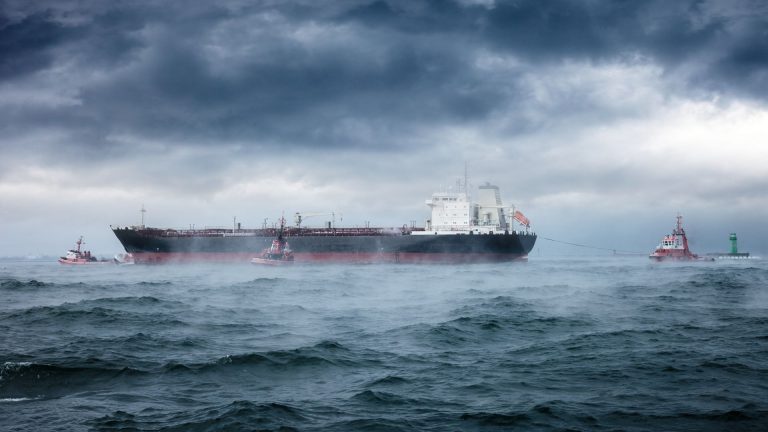
Imagine that Company A and Company B entered into a sales contract where Company A is to sell oil to Company B. Company A engaged a shipowner under a contract of carriage to transport the oil to Company B by sea. However, during the voyage, conflict broke out at the destination port. This results in Company A being unable to deliver the oil to Company B, at least for the time being.
Without force majeure clauses, company A may be liable to Company B for breach of contract for failure to deliver cargo on time, while the shipowner may be liable to company A for failing to deliver cargo to its destination. Both parties bear significant losses due to circumstances that are beyond their control.
What is Force Majeure?
Force majeure is a contractual mechanism that may excuse, suspend or modify a party’s obligations when performance is affected by specified events beyond that party’s reasonable control.
Common Elements of Force Majeure
(a) Definition of force majeure events: The clause will typically list events such as war, armed conflict, terrorism, natural disasters, strikes, epidemics, pandemics, acts of government, sanctions, embargoes, port closures, export restrictions or events beyond a party’s reasonable control.
(b) Threshold for force majeure relief: The clause may require the event to “prevent”, “hinder” or “delay” performance. These words can have materially different effects. In the Singapore court of appeal case of Holcim[1], the court held that a clause requiring prevention is harder to satisfy than one that covers hindrance or delay.
(c) Causation: The affected party usually must show that the force majeure event caused the relevant failure or commercial impracticality.
(d) Notice obligations: The clause may require prompt written notice within a specified number of days, often with details of the event, affected obligations, expected duration and supporting evidence.
(e) Mitigation obligations: It is common for force majeure clauses to include that force majeure events must be “beyond the control”. Accordingly, affected parties need to take reasonable steps to avoid, reduce or overcome the impact of the event, such as exploring other methods of performance such as alternative routes or vessels.
(f) Consequences: In the event of force majeure, the clause should state the consequences. Consequences can differ such as suspended performance, extension of time, allocation of costs, or the parties must consult or renegotiate.
Key Factors Clients Should Note
1. Force Majeure Is a Creature of Contract
In common law jurisdictions such as Singapore and England, force majeure does not operate as an independent doctrine. This means that a party cannot rely on the typical benefits of a force majeure clause unless the contract expressly provides for it. If the contract does not contain a force majeure clause, the affected party may have to turn to other legal doctrines, such as frustration. However, frustration is only applied in very limited situations and is considered as a blunt legal instrument (when a contract is frustrated, it results in an immediate termination of the contract).
Parties who requires risk allocation must therefore include a force majeure clause in their contracts and ensure that it is drafted to reflect the risks most relevant to their trade, goods, routes and counterparties. The below table shows how risks may differ between parties.
|
Contract of carriage |
||
|
Consignor/Shipper |
Consignee |
Carrier |
|
Supply shocks |
Damages to goods received |
Route disruptions |
|
Vessel unavailability |
Delayed receipt of goods |
Port closures |
2. Force Majeure is not a universal escape hatch
It is a common misconception that having a force majeure clause will allow parties to be excused from contractual obligations as long as an event listed in the clause or other unexpected events occur. Courts interpret force majeure clauses strictly, examining whether there is sufficient causal link between the event and non-performance and whether all procedural requirements were satisfied.
Unlike a typical sales contract involving two parties, a contract of carriage often involves a web of interconnected contracts between carriers, cosigners and consignees. A single force majeure event may cause a ripple effect to other contracts of varying degrees. As wording in force majeure clauses differ between various parties, the resulting risk allocation can be different from how parties ordinarily envisioned.
3. Notice Requirements
Many force majeure clauses require notice to be given within a short period after force majeure event occurs. This can be challenging when disruptions occur as facts may be incomplete and the affected party may be focused on managing the immediate crisis.
Yet, failure to comply with notice requirements may prejudice or even defeat a force majeure claim, depending on the wording of the clause.
4. Evidence is Critical
A party invoking force majeure has the burden of proof to show the existence of the force majeure event and its effect on performance. The evidence should prove not only that a force majeure event occurred, but also why that event prevented, hindered or delayed the specific contractual obligation. Hence, it is critical for parties to actively gather evidence when force majeure events occur.
5. Expanding list of events is not the “cure of all evils”
Traditionally, force majeure events are limited to “acts of God” such as natural disasters, wars and strikes. In recent years, parties have expanded the list of events to include sanctions and pandemics.
However, expanding the list of force majeure events may not be the panacea to the issues. There remains a question as to whether certain events are truly “an act of God”. Sanctions, for example, does not fit the strict definition of an “act of God” as it is a man-made intervention, and arguably caused by the sanctioned party falling foul of a third country’s trade restrictions. Additionally, parties seeking to rely on force majeure may face another obstacle in proving that reasonable steps have been taken to avoid the consequence (should the force majeure clause include terms similar to “beyond parties’ control”).
Key Takeaways
- Force majeure clauses deserve close attention during contract formation. In an environment of rising trade disruption, the clause may determine whether a party has meaningful contractual protection or is left to manage the consequences of disruptions without contractual relief.
- Force majeure must be an express contract term if parties want to rely on it in common law jurisdictions.
- Drafting matters! Remember to always review the wording of the clause. It affects the availability of parties to rely on force majeure through the obligations imposed on parties:
- Notice: Clarify the deadline, recipient, form of notice, required information and whether continuing updates are required.
- Event: Ensure that the clause covers the risks most likely to affect the relevant goods, route, market and industry.
- Threshold: Be aware whether force majeure should be available only where performance is prevented, or where it is hindered, delayed or made impracticable.
- Consequences: Provide for suspension, extension of time, cost allocation, termination after prolonged disruption, or consultation between the parties.
Conclusion
It is evident that force majeure clauses are no longer mere boilerplates. A well-drafted force majeure clause can be the lifeline for a party when contractual performance is affected by external factors. Even where a seller/shipper lacks the bargaining power to amend a force majeure clause, awareness of the contractual position remains valuable to understand the required actions and precautions should a force majeure event occur.
We wish to thank our Interns, Jonah Boo and Wendy Tong Pei Wei , for their contributions to this article.
Prepared By:

John Sze
Managing Partner
JTJB LLP
E: johnsze@jtjb.com
T: 6324 0232
[1] Holcim (Singapore) Pte Ltd v Precise Development Pte Ltd and another application [2011] 2 SLR 106
Don’t miss out on the latest legal updates and subscribe to our mailing list for timely insights – subscribe here